
 Back To Blog List


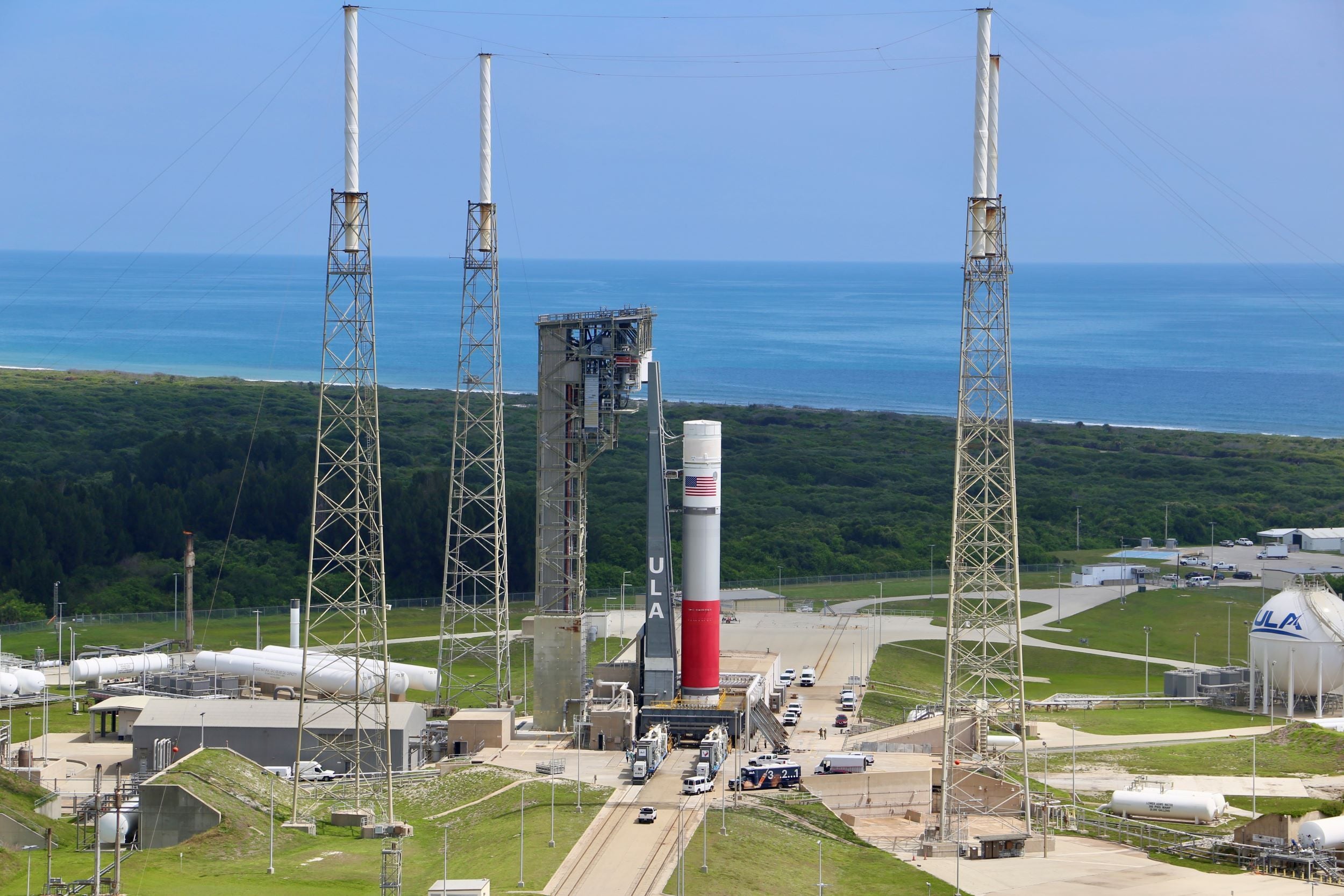

United Launch Alliance (ULA) rolled out a Vulcan rocket to Space Launch Complex (SLC)-41 at Cape Canaveral Space Force Station to undergo an extensive test countdown prior to the inaugural flight from our new launch processing lane dedicated to Amazon.
Known as a Wet Dress Rehearsal (WDR), ULA is preparing to conduct a full day-of-launch test to demonstrate propellant loading and operations with the new LEO-optimized Centaur V upper stage, designed to enhance Vulcan's performance for Amazon, and the functions of the Vulcan Launch Platform (VLP)-A, the second Vulcan platform to serve Amazon Leo missions on our heavy-lift rocket.
The WDR also exercises the first stage hardware and pad systems, the software and procedures for running the countdown and the combined launch team -- all to reduce the risk of a delay on launch day. The rehearsal follows the tightly scripted sequence by rolling the Vulcan from the newly commissioned Amazon Vertical Integration Facility (VIF-A) to SLC-41, performing the entire countdown to fuel the rocket and returning the vehicle to the VIF-A afterwards.
The first step -- moving VLP-A and rocket 2.7 miles (4.3 km) from VIF-A to the pad -- is complete. The second step -- an initial test day will be spent going through the "chilldown" process to thermally condition Centaur V and launch platform to handle the cryogenic liquid oxygen and liquid oxygen propellants and partially filling only the upper stage -- was also accomplished. The third step is the full WDR day that rehearses the entire countdown process. Vulcan is expected to spend approximately one week at the pad.
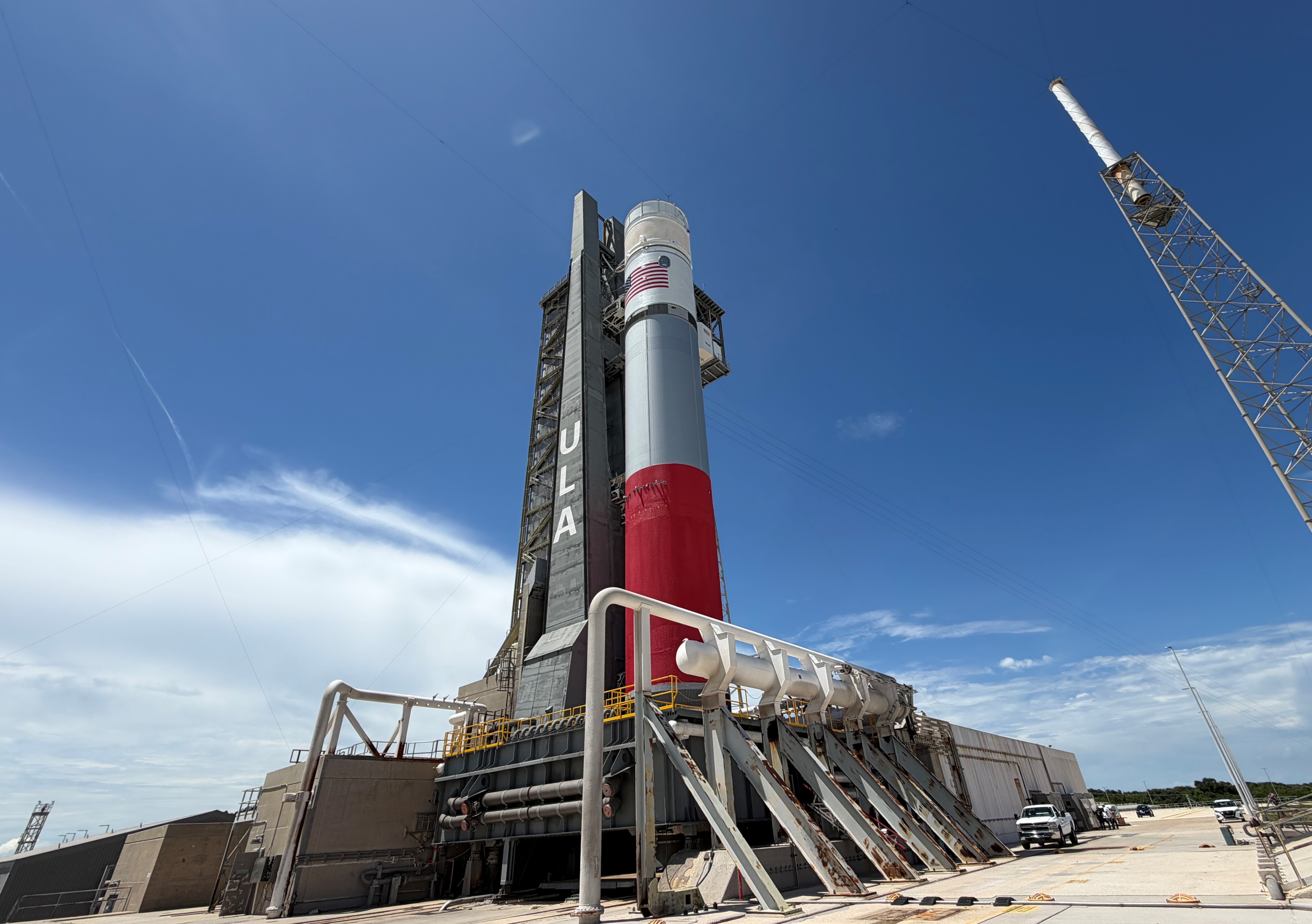
The rocket was stacked in VIF-A in May and underwent rigorous first article testing and system readiness checks in the new facility to prepare for the WDR campaign. Through the summer, the team will perform these risk-reduction efforts ahead of the first Vulcan Leo launch. A launch date has not been established.
As a key part of ULA's commitment to Amazon, this new version of Centaur V was created to leverage Vulcan's powerful high-energy architecture to match the needs of Amazon to place heavy amounts of payload mass into LEO.
The Vulcan Amazon missions require a reduced fuel load to reach their LEO destination and therefore the upper stage can be built smaller to account for less overall weight than the standard high energy Centaur V. The weight savings translates into additional satellites each Vulcan mission can launch to the various orbital planes of the Amazon Leo constellation.
At 35 feet tall, the LEO-optimized Centaur V is approximately six feet (1.8 m) shorter and carries a third less propellant than the high energy variant that successfully flew Vulcan's initial missions thus far.