
 Back To Blog List


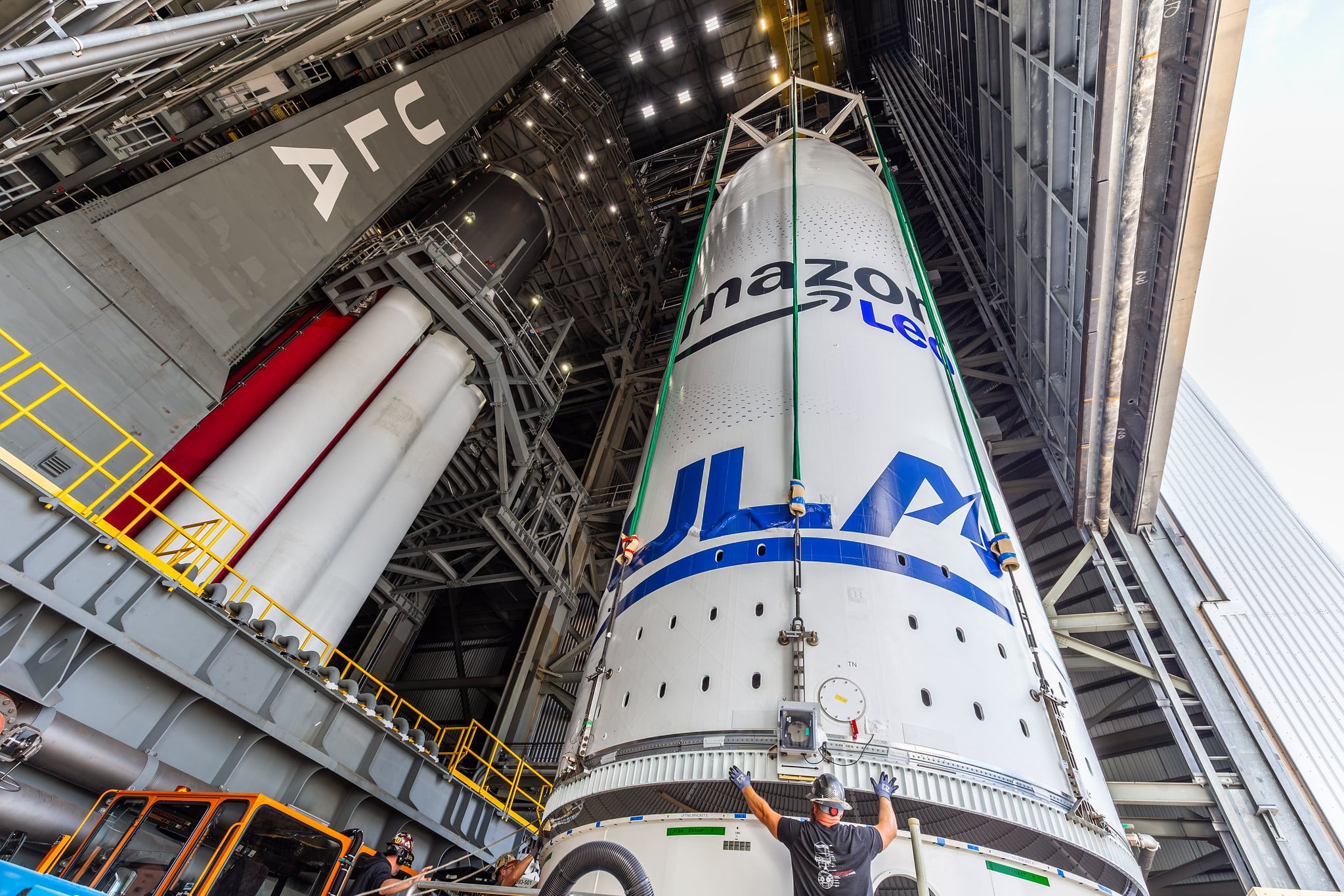

United Launch Alliance (ULA) plans the first of 38 heavy-lift missions for expansion of the Amazon Leo broadband constellation on Nov. 13.
Liftoff from Space Launch Complex-41 at Cape Canaveral Space Force Station in Florida will occur during a 29-minute launch window that opens at 12:54 p.m. EST (1754 UTC) to place the next 40 satellites into space for Amazon. It will be the largest number of satellites carried on a single Amazon launch to date.
ULA will provide a live countdown and mission status blog beginning at 7:30 a.m. EST (1230 UTC) and a launch stream starting 20 minutes before liftoff. Both can be found on the ULA website.
Returning Vulcan to flight
After experiencing a solid rocket booster (SRB) nozzle anomaly during a launch in February, the integrated team of ULA, SRB supplier Northrop Grumman, the U.S. Space Force and other government agencies conducted a rigorous investigation. That work included analysis, laboratory-level material testing, component testing and a full-scale hot fire of a GEM 63XL motor in Utah.
Great strides have been made in improving our understanding of what occurred and the vulnerabilities of the previous nozzle design. The team identified three credible causes, and we have taken positive steps to mitigate all of those. Those changes to the nozzle -- its design and how it was built -- have been tested thoroughly and are incorporated into the SRBs that will fly on this upcoming mission.
While proceeding into flight, the investigation continues with additional analysis and tests that affords the opportunity to increase the understanding of the nozzle's behavior, the effectiveness of the corrective actions implemented and the potential identification of additional design improvements that could be incorporated in the future to further improve the robustness of the nozzle. Proceeding down parallel paths of continuing the investigation while obtaining flight data on this new improved design is the best path for ULA and our customers.
"As with any new rocket, there are risks associated with every launch, and particularly as we are early in this phase of introduction of Vulcan to the market and working to a regular operational tempo. Every flight generates data and every flight teaches us something. And we're going to look to this flight to get some more useful data in a flight environment on the effectiveness of the corrective action that we've implemented," said Mark Peller, ULA president and CEO.
"During our first four Vulcan missions, the robustness of Vulcan served us well. It flew through some difficult environments associated with the SRB anomalies and successfully completed all of those missions, giving the spacecraft both a smooth ride and precise, bullseye orbital injections."
New capabilities
The Vulcan Leo 1 mission inaugurates a dedicated processing lane to launch Amazon's advanced broadband satellites using an optimized configuration of the Vulcan rocket and purpose-built infrastructure.
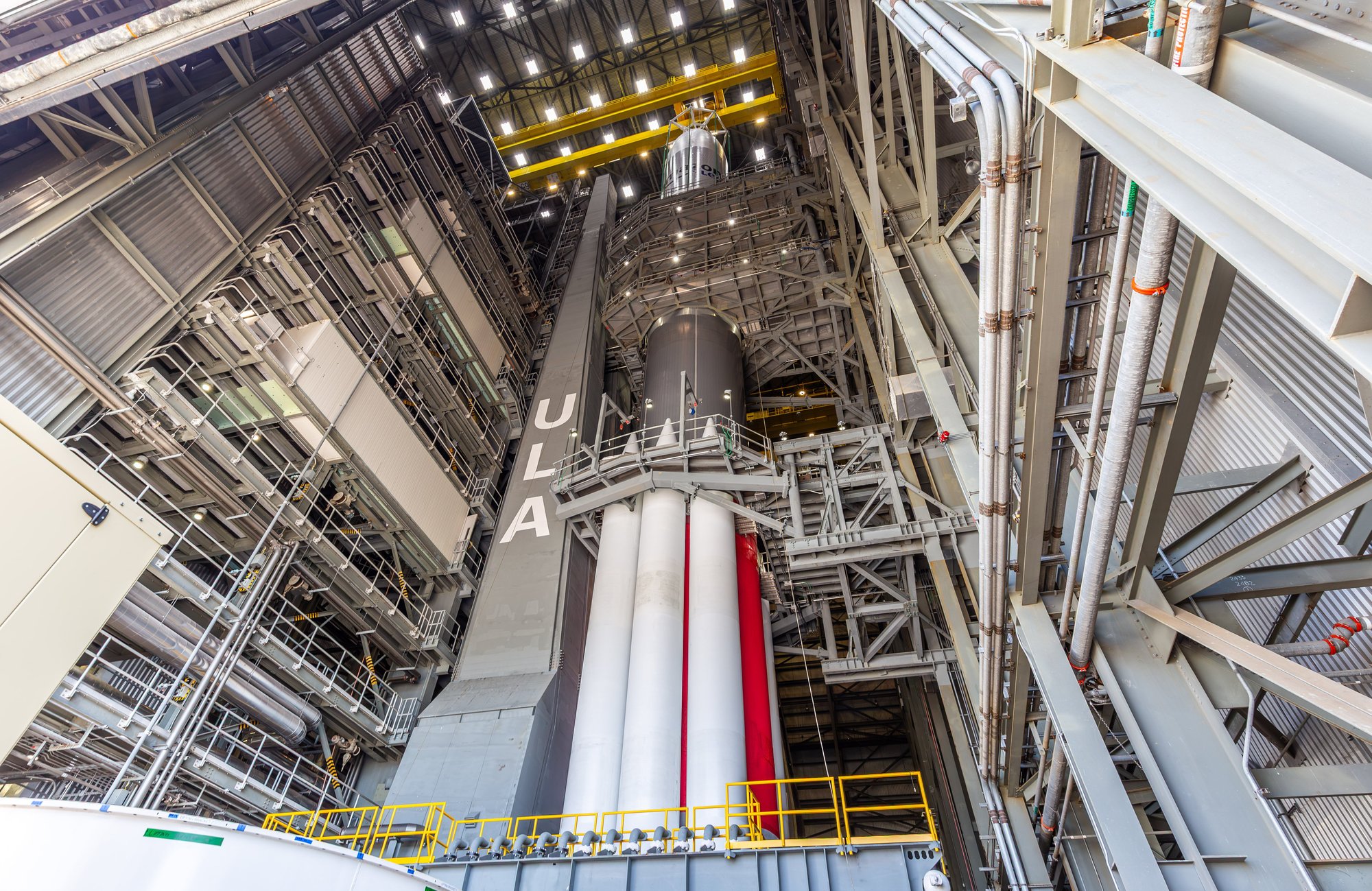
The rocket was assembled in the Amazon Vertical Integration Facility (VIF-A) aboard the Amazon Vulcan Launch Platform (VLP-A), creating a second launch processing lane for ULA operations at the Cape. Dual facilities will enable a higher launch cadence in support of all Vulcan customers.
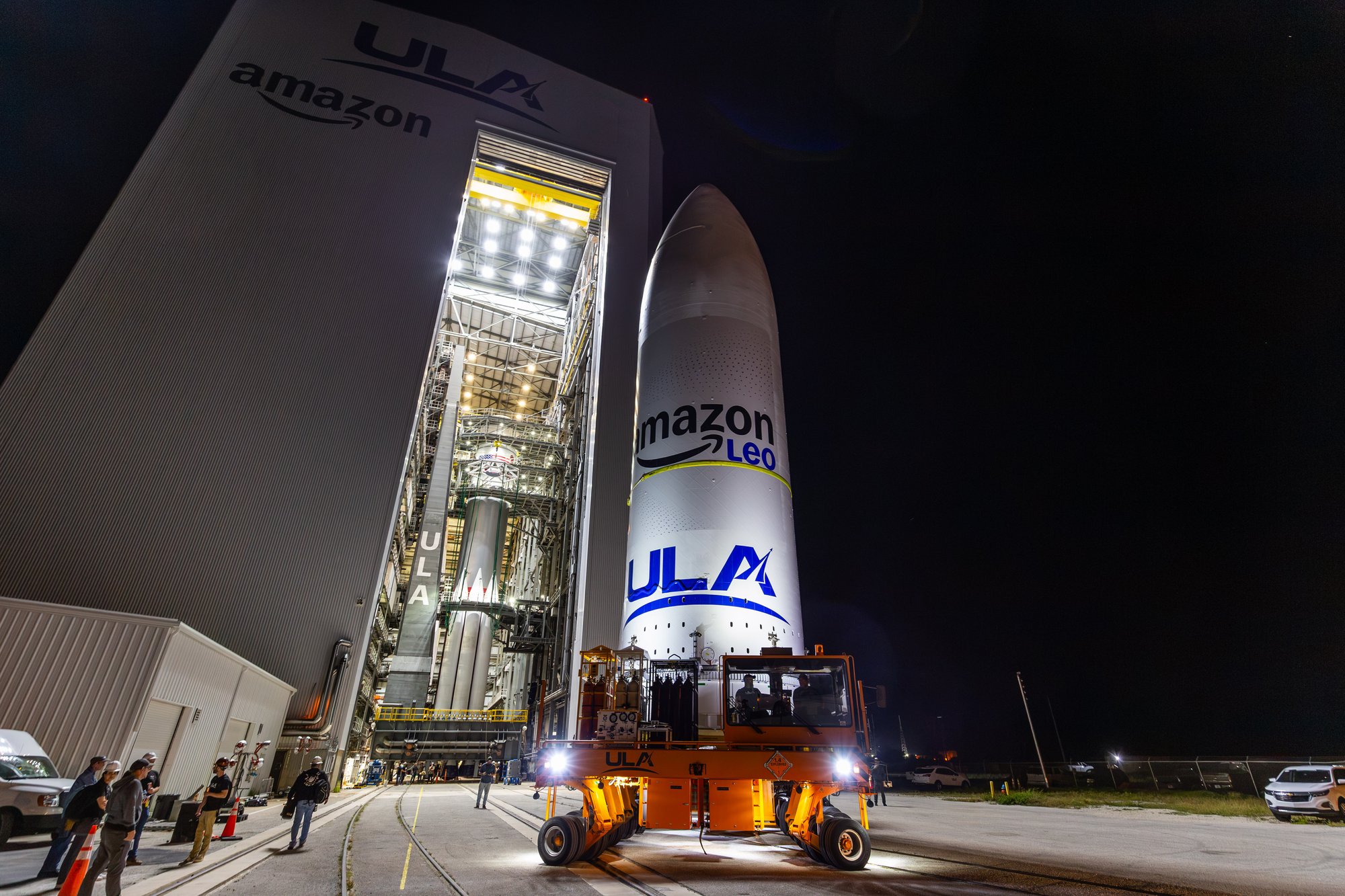
this Vulcan rocket, designated V-012, will fly in the VC6L variant with a full complement of six SRBs and a longer-length payload fairing. It also features the first low Earth orbit (LEO)-optimized Centaur V upper stage to provide the required performance to carry the large batch of satellites. Vulcan Leo 1 will deliver more than 50,000 pounds (22,700 kg) of payload to orbit, setting a new record for ULA.
As a key part of ULA’s commitment to Amazon, this new version of Centaur V was created to leverage Vulcan's powerful high-energy architecture to match Amazon’s needs to deploy large quantities of spacecraft in a single mission.
The upper stage has a reduced fuel load required to reach its destination and therefore can be built smaller and itself account for less overall weight than the standard high energy Centaur V. The weight savings translates into additional satellites each Vulcan mission can launch to the various orbital planes of the Amazon Leo constellation.
At 35 feet tall, the LEO-optimized Centaur V is approximately six feet (1.8 m) shorter and carries a third less propellant than the high energy variant that successfully flew Vulcan's initial missions thus far.
Vulcan Leo 1
The fully assembled Vulcan Leo 1 rocket stands 215 feet tall (65.5 m) and will weigh 1.99 million pounds (903,500 kg) once fueled with cryogenic propellants for launch. At liftoff, the two BE-4 main engines and six side-mounted SRBs generate 3.9 million pounds (17.2 megaNewtons) of thrust to propel the vehicle into space.
Vulcan goes supersonic at 37 seconds and passes the region of maximum dynamic pressure at 55 seconds as the flight path heads northeasterly to reach a 51.9-degree orbit.
Each GEM 63XL SRB consumes more than 100,000 pounds (45,400 kg) of propellant, proving three-quarters of the total liftoff thrust. Burnout comes a minute-and-a-half into flight followed by jettison of the spent casings.
Vulcan then engages its onboard guidance control to steer towards its precise target in space to deliver the Amazon satellites. The first stage burns for another three minutes at full throttle. Once reaching 4-Gs, the engines throttle back to hold at a constant acceleration through the remainder of boost phase.
Five minutes after liftoff, the Vulcan first stage exhausts its million-pound LNG and liquid oxygen propellant supply and performs Booster Engine Cutoff. Stage separation occurs east of Charleston, South Carolina.
The dual RL10C-1-1A engines on the Centaur V then ignite to continue the journey into orbit. Shortly after Main Engine Start-1, the 70-foot-long (21.3-meter) payload fairing that protected the Amazon Leo satellites during the climb through the atmosphere is no longer needed and is jettisoned.
The initial burn by Centaur lasts nearly 12 minutes to achieve a preliminary parking orbit around Earth. The engines are shut down by a guidance-calculated command over the North Atlantic.
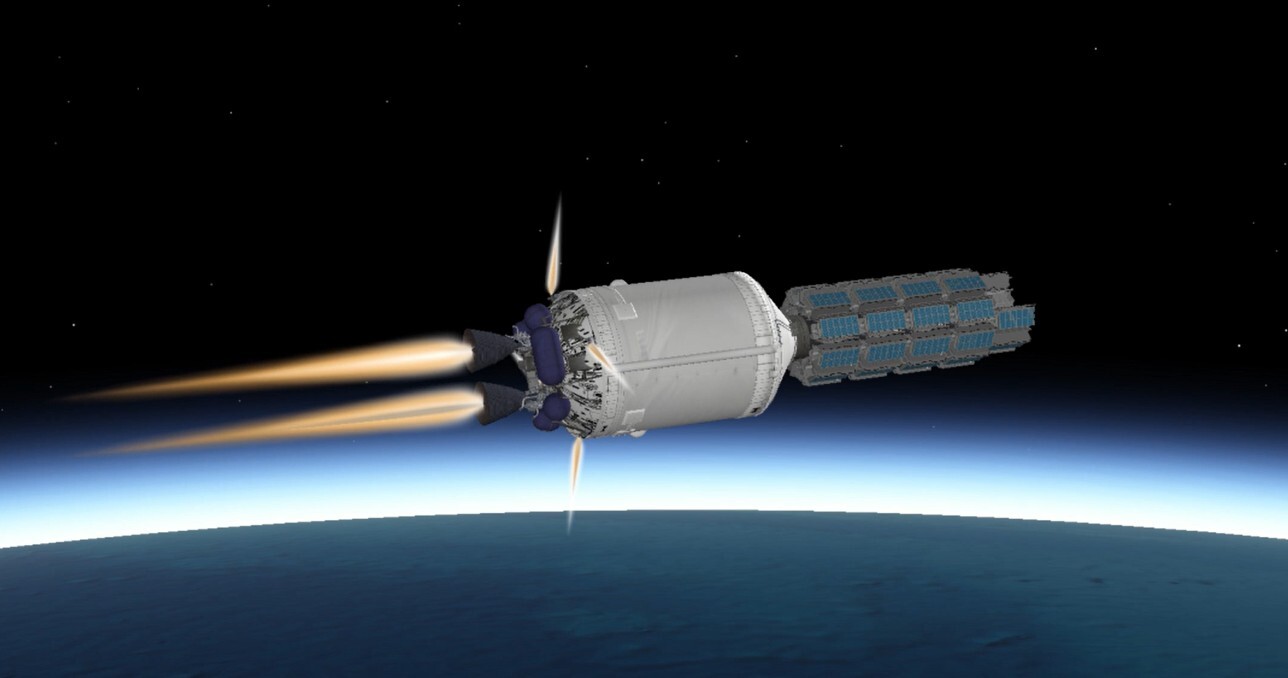
The upper stage then embarks on a 50-minute coast period in this elliptical orbit to reach the high point for a brief, second firing of the engines south of New Zealand. Main Engine Start-2, at 66 minutes, occurs near apogee and serves to circularize the orbit at approximately 285 miles to complete the powered phase of flight.
The Leo satellite deployments are initiated 70 minutes into flight and last for 25 minutes as the rocket crosses the Pacific Ocean. In all, there will be 16 separation events to release the 40 satellites from the customer-provided dispensing system riding atop the Centaur V. Each of the first four events will release one satellite and the final 12 events separate three satellites at a time.
Amazon Leo is built around an initial constellation of more than 3,000 advanced low Earth orbit satellites. Its mission is to provide fast, reliable internet to customers and communities around the world, including those unserved or underserved by traditional connectivity technologies. The system has the capacity, performance, and flexibility to serve a wide range of customers, from individual households to schools, hospitals, businesses, government agencies and other organizations operating in places without reliable connectivity.
Learn more about the Vulcan Leo 1 launch
See our Vulcan Leo 1 photo album

