
 Back To Blog List



Space is the new battlefield high ground, and the upcoming United Launch Alliance (ULA) Vulcan rocket flight will help to protect U.S. national security orbital assets by launching a “neighborhood watch” surveillance system directly into geosynchronous orbit.
The USSF-87 multi-manifested mission for the U.S. Space Force’s Space Systems Command will launch aboard a Vulcan VC4S rocket on Feb. 12 from Space Launch Complex-41 at Cape Canaveral Space Force Station in Florida.
The rocket will use four side-mounted solid rocket boosters (SRBs) and a dual-engine Centaur V upper stage to deliver the heavy payload more than 22,000 miles (35,000 km) above the Earth. Vulcan’s versatility and purpose-built, high-energy rocket architecture is designed to meet all of the demanding national security requirements of our nation’s space launch needs.
Launching atop the rocket, as the forward spacecraft, is the Geosynchronous Space Situational Awareness Program (GSSAP) spacecraft built by Northrop Grumman, launching to GEO with an ascending node injection to improve our ability to rapidly detect, warn, characterize and attribute disturbances to space systems in the geosynchronous environment. The Aft SV, provided by Northrop Grumman, is a propulsed ESPA flying multiple payloads launching into a direct inject GEO orbit.
USSF-87 is the heaviest payload yet carried by Vulcan and ULA’s next-generation rocket’s longest launch to date, almost 10 hours from liftoff until end-of-mission.
This will be the GSSAP program’s fourth launch, all performed by ULA, to support U.S. Strategic Command space surveillance operations as a dedicated Space Surveillance Network sensor. Delta IV rockets launched the first two GSSAP missions in 2014 and 2016 and Atlas V launched the third in 2022.
From their vantage point, GSSAP satellites have clear and unobstructed viewing of objects in space without the interruption from weather or the atmospheric distortion that can limit ground-based observations. This allows for more accurate tracking and characterization of human-made orbiting objects and enables spaceflight safety to assist in avoiding satellite collisions.
The GSSAP spacecraft also have the capability to perform Rendezvous and Proximity Operations (RPO). RPO allows the space vehicle to maneuver near a resident space object of interest, enabling characterization for anomaly resolution and enhanced surveillance, while maintaining flight safety.
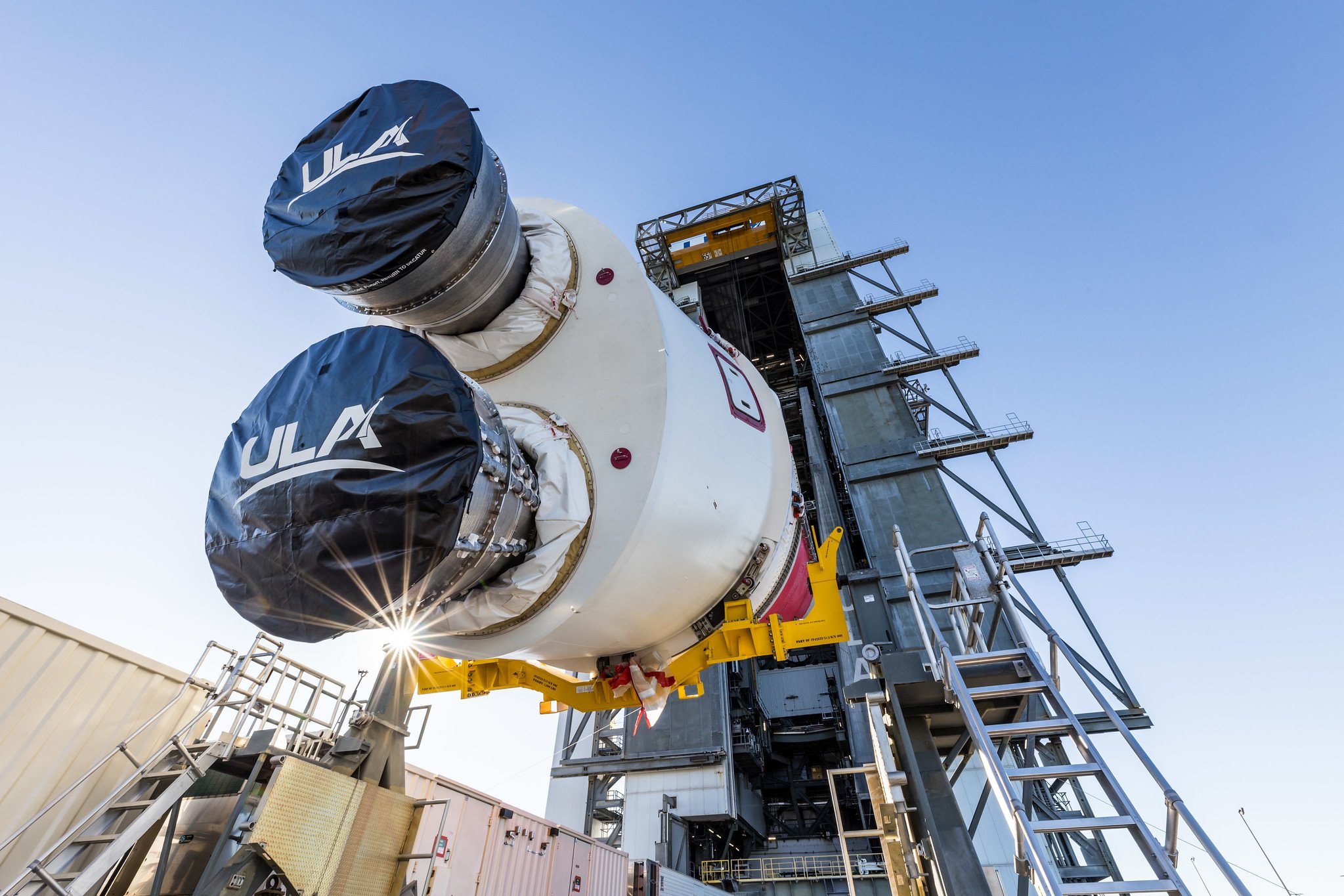
Preparations for this Vulcan launch began Dec. 31 by placing the methane-fueled first stage aboard the Vulcan Launch Platform (VLP) at the Government Vertical Integration Facility (VIF-G). That was followed by attaching the four SRBs and Centaur V.
This launch campaign is the first Vulcan to use the more-efficient Offline Vertical Integration (OVI) process to pre-assemble the interstage with Centaur, a procedure that originated on the Atlas V program to reduce the amount of time spent processing a rocket at the VIF.
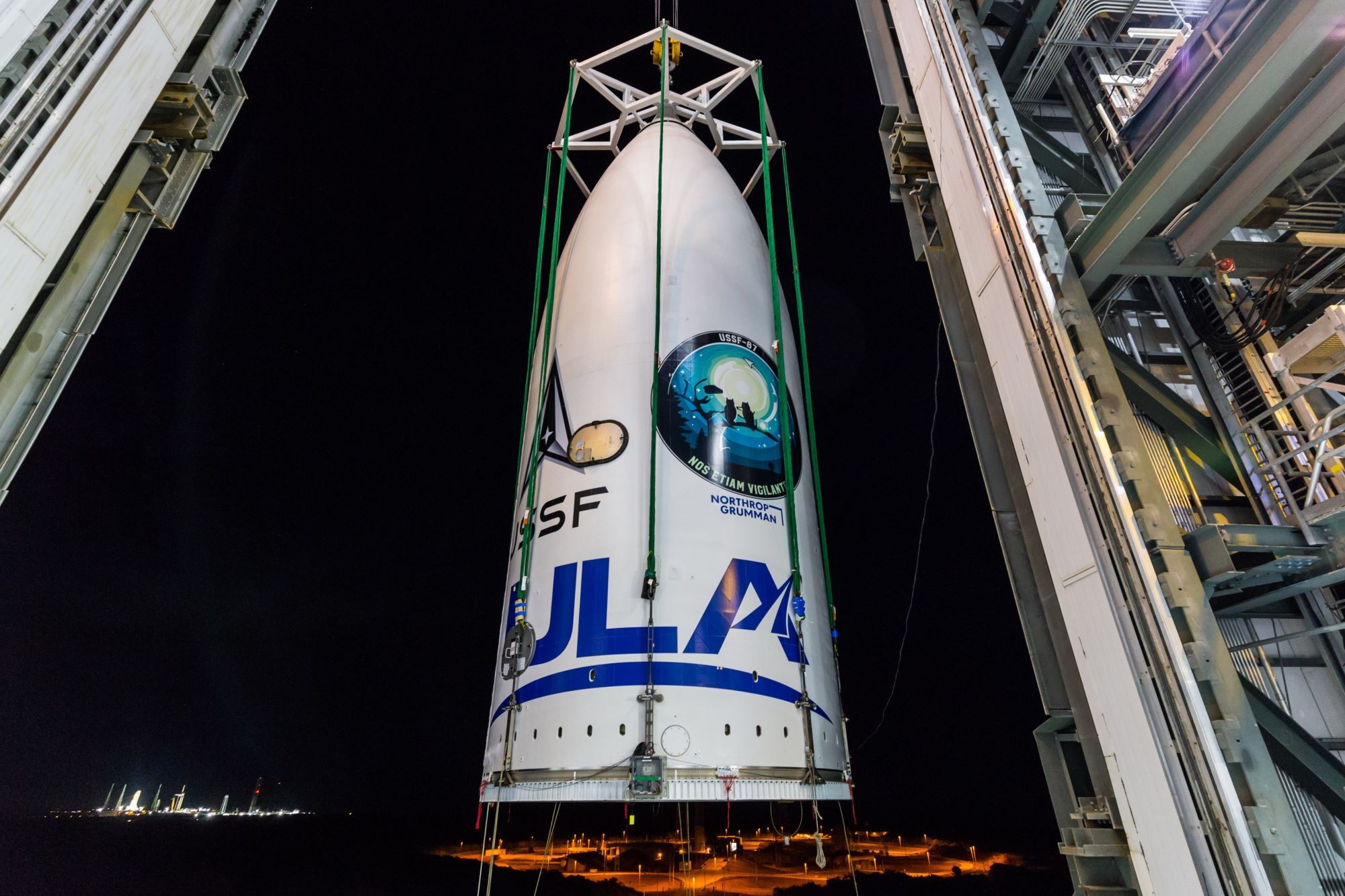
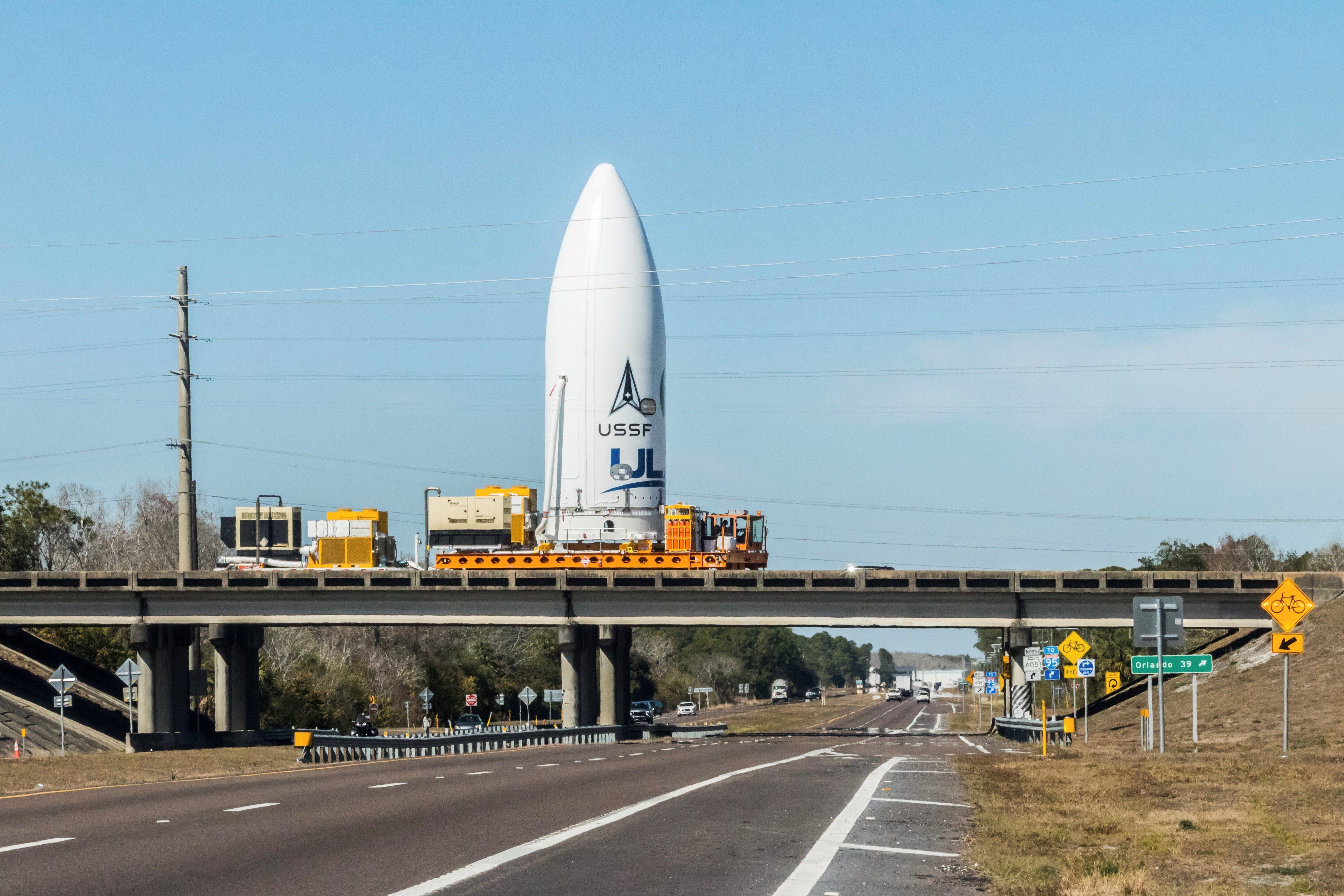
The payload, encapsulated in a 51-foot-long (15.5m) Vulcan composite fairing, was hoisted into the VIF on Feb. 3. The fairing features the USSF-87 mission logo and Space Force emblem.
The fully stacked rocket, designated V-005, stands 202 feet (61.6 meters) tall aboard its VLP, will weigh 1.7 million pounds (790,000 kg) once fueled in the countdown and generate 3 million pounds (13.3 kiloNewtons) of thrust at liftoff.
Learn more about the Vulcan USSF-87 launch
See our USSF-87 photo album